Fast UK dispatch · Third-party tested · Lot-matched certificates
Growth Hormone
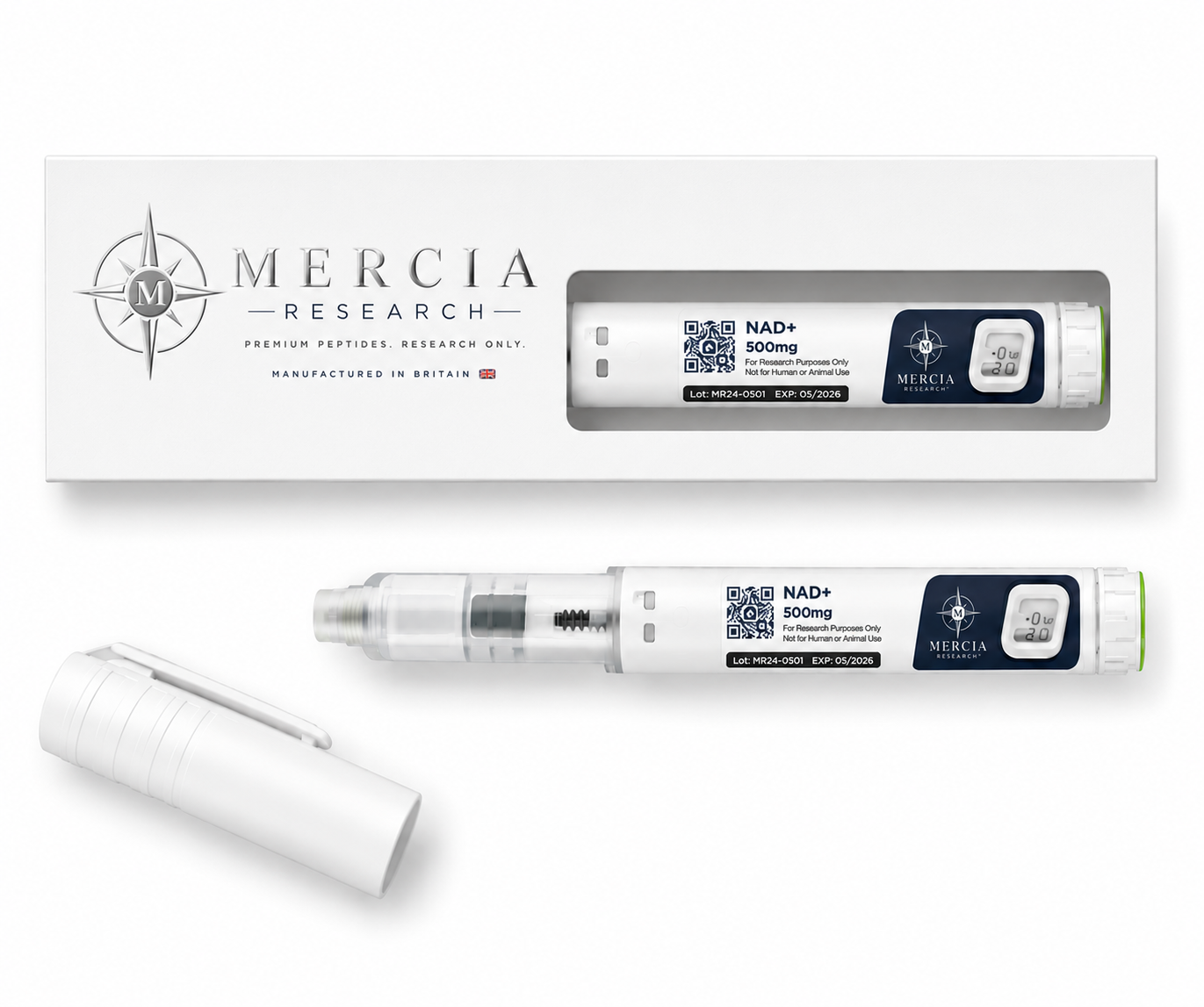
NAD+ 500mg
- Type:
- Nicotinamide adenine dinucleotide.
- Form:
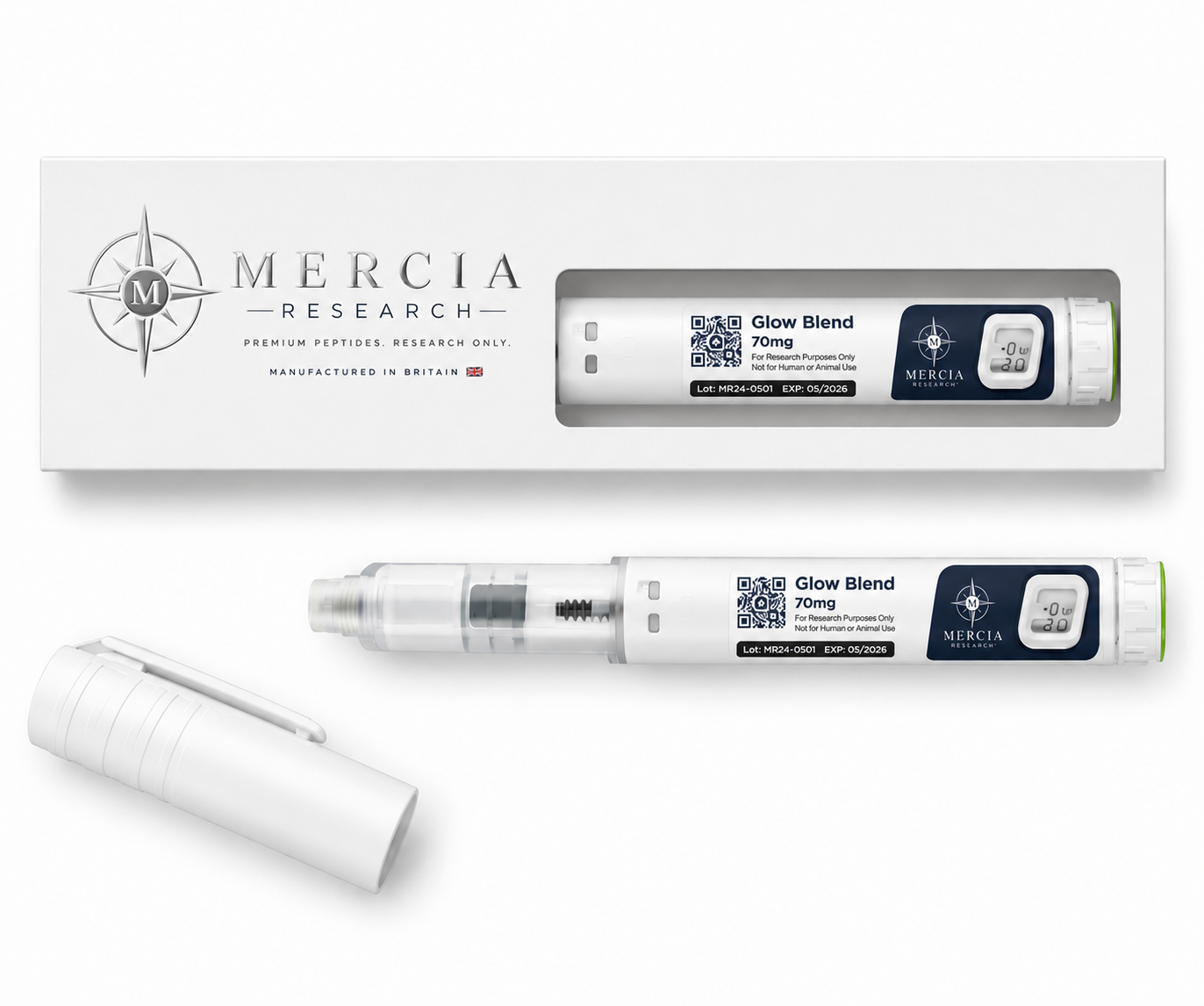
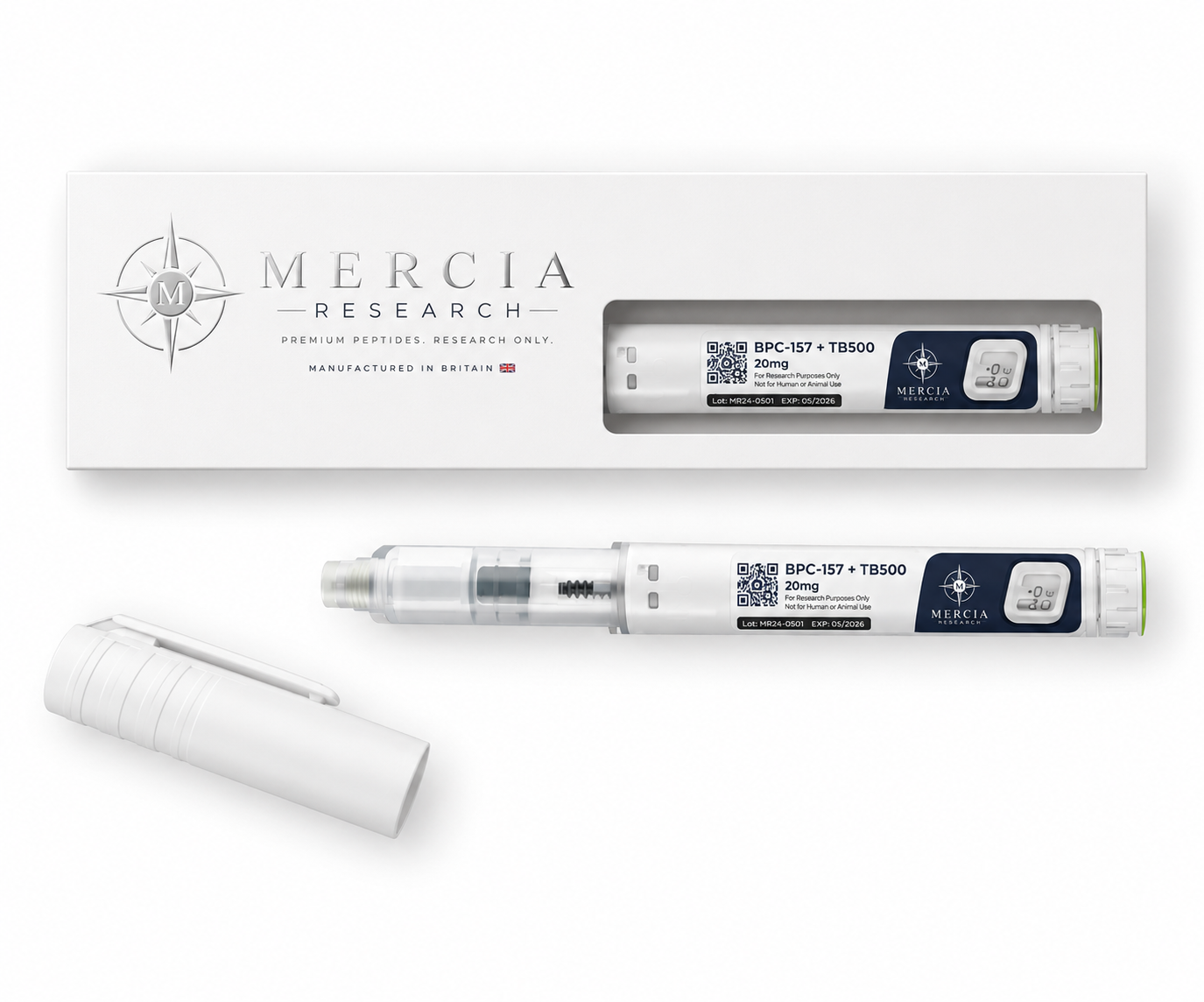
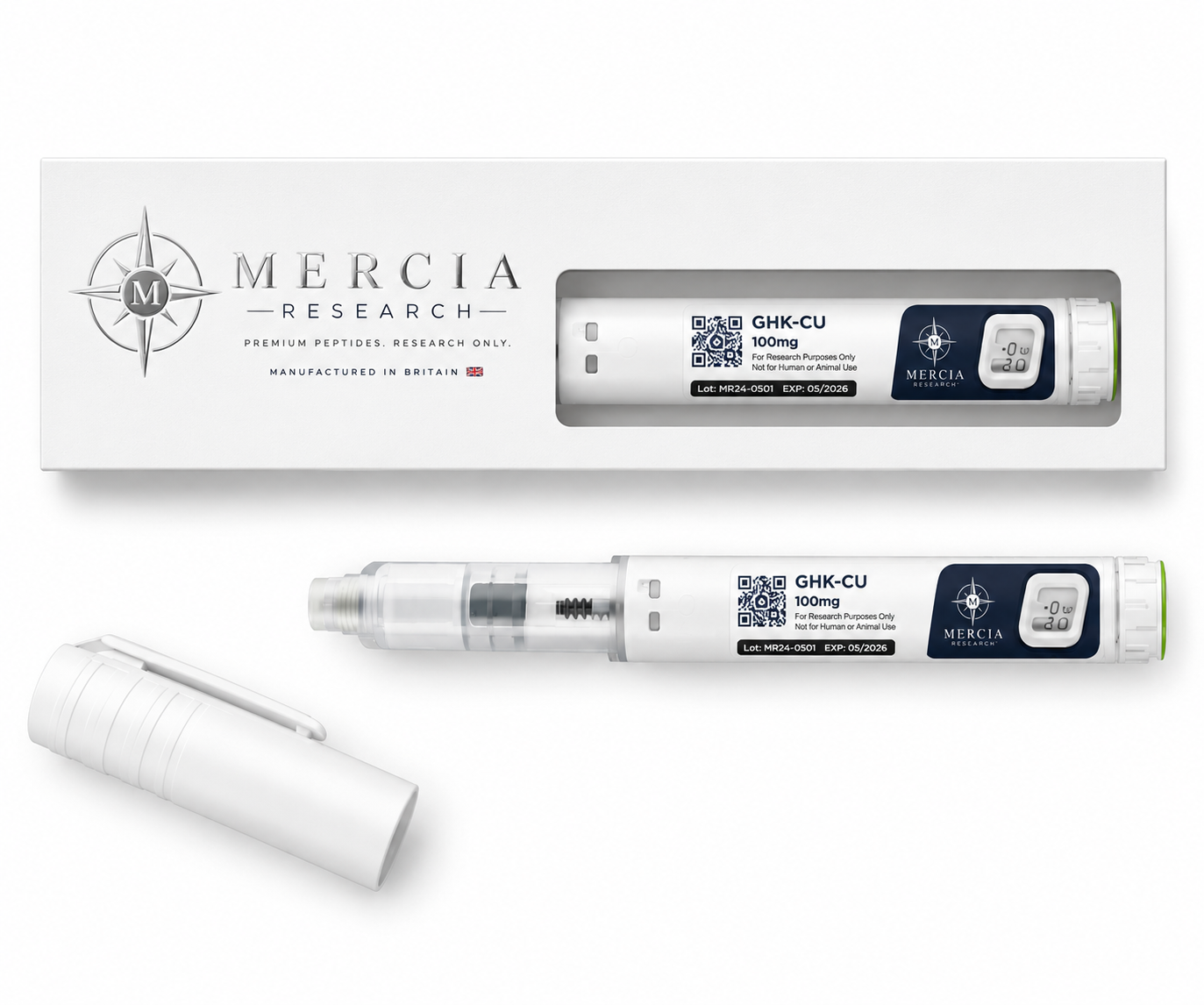
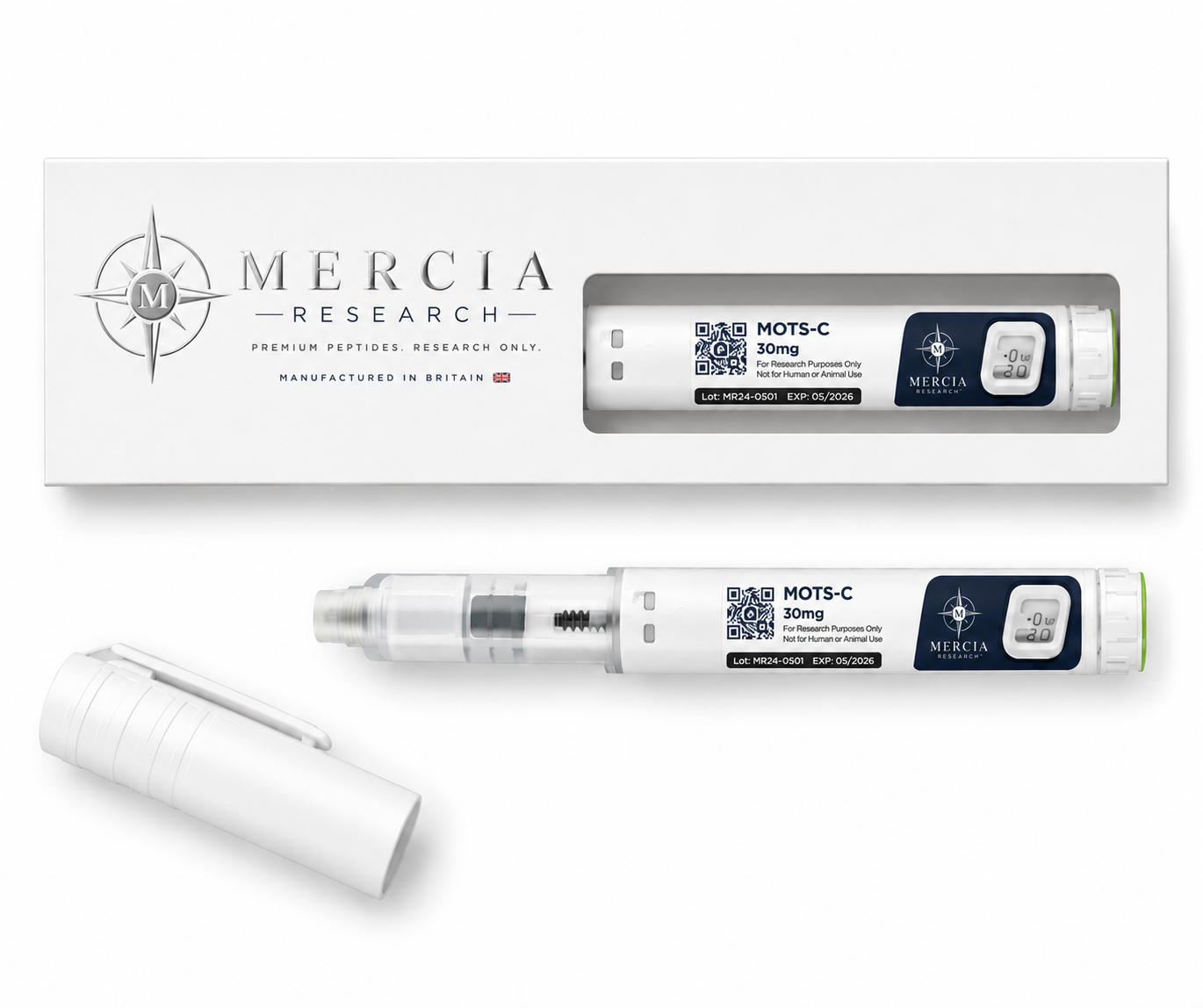
- Ready-to-use liquid solution in a 500mg research cartridge.
- Application:
- Sirtuin pathway research
500mg · Ready to use
£0.30 per mg · 500mg total
£149.00
Choose your pack
Lot-matched 3rd party CoA with every batch
Qty
99.61%
HPLC purity, verified per lot
MS
Mass-spec confirmed identity
LAL
Endotoxin tested to established limits
UK
Synthesised and tested in Britain
What's in the cartridge
A central cellular cofactor for redox reactions and sirtuin/PARP activity. Researched in cellular bioenergetics, sirtuin signalling, and longevity models.
Specifications
Format
Liquid peptide solution, 500mg
Molecular formula
C₂₁H₂₇N₇O₁₄P₂
Molecular weight
663.43 g/mol
Purity
99.61%
Abbreviation
NAD
Vials vs Pens
11 Steps. Or one.
A vial arrives as powder: you mix it, measure it, and draw every dose by hand. The Mercia Pen arrives ready.
Traditional Vial
Mercia Pen
11 steps
mixing, measuring, drawing
1 click
dial the dose, press
~12 minutes
plus a 5 minute wait mid-way
12 seconds
ready when you are
Hand-measured
syringe markings, eyeballed
Mechanical click
the same dose, every time
Opened repeatedly
every needle re-entry is a risk
Factory-sealed
never opened, never mixed
Syringes + water
plus wipes and a sharps bin
Nothing else
everything is in the pen
Handling and storage
Store
Store immediately at 2–8°C upon delivery. Do not freeze.
Shipping
Shipped in validated temperature-controlled packaging to maintain product stability during transit.
Avoid Freezing
Do not freeze, as freezing may compromise product quality.
Temperature Tolerance
Stabilised below 25°C for delivery. Should not be exposed to higher temperatures.
3rd Party Tested
Independently tested for heavy metals, residual solvents and endotoxins to established limits.
Full Traceability
Batch-level traceability from production to delivery.
Certificate of Analysis
Lot-matched 3rd party CoA with every batch. Available on our website.
Shelf Life
12 months from manufacture when stored at 2–8°C.
What customers say
Research overview
NAD+ (Nicotinamide Adenine Dinucleotide), also written NAD or NAD Plus, is a central coenzyme found in all living cells. Supplied here as a UK-manufactured liquid peptide solution in a ready-to-use 3ml research cartridge, it plays a fundamental role in cellular energy metabolism and serves as a substrate for several classes of regulatory enzymes. Its decline with age has made it a major focus of longevity and metabolic research.
Mitochondrial Biogenesis and PGC-1α Signalling
Beyond its role as a redox cofactor, NAD+ availability has been linked to mitochondrial biogenesis through PGC-1α (peroxisome proliferator-activated receptor gamma coactivator 1-alpha), widely regarded as the master transcriptional regulator of new mitochondria formation. Research has examined how SIRT1, itself NAD+-dependent, deacetylates and activates PGC-1α, creating a direct link between cellular NAD+ status and the downstream network of nuclear respiratory factors (NRF-1, NRF-2) and mitochondrial transcription factor A (TFAM) that PGC-1α coordinates. This pathway has been studied across metabolic, muscle and neuronal tissue models.
The NAD+ Salvage Pathway
Most cellular NAD+ is maintained not through synthesis from scratch but via the salvage pathway, recycling nicotinamide back into NAD+. Nicotinamide phosphoribosyltransferase (NAMPT) is the rate-limiting enzyme in this pathway, and research has examined its role in determining tissue-level NAD+ availability. The pathway also intersects with NAD+ precursor research, nicotinamide riboside (NR) and nicotinamide mononucleotide (NMN) both feed into salvage synthesis via NMN adenylyltransferase (NMNAT), and studies have investigated whether these precursors upregulate SIRT1-PGC-1α signalling in liver and bone tissue models. This body of research forms part of the broader rationale for studying direct NAD+ availability alongside precursor-based approaches.
CD38 and Age-Related NAD+ Decline
Alongside PARP and sirtuin consumption, CD38, a glycohydrolase expressed on immune cells, has been identified as a major contributor to age-related NAD+ decline. Research in aged animal models has reported that CD38 expression rises substantially with age, while PARP and SIRT1 activity remain comparatively stable, positioning CD38 as a distinct driver of declining NAD+ pools rather than simply another competing consumer. Studies using CD38 knockdown or pharmacological inhibition have reported preservation of NAD+ levels and mitochondrial function in aged models, and CD38 expression has also been linked to inflammatory and senescence-associated processes, an active area of current research interest.
Research Format and Quality Assurance
Supplied as a pre-mixed liquid peptide solution with no reconstitution step, each cartridge is independently HPLC-tested for purity and confirmed for identity by mass spectrometry, with a lot-matched Certificate of Analysis issued for every order. For a deeper look at NAD+'s sirtuin signalling and PARP-competition research specifically, see our Knowledge Hub article, NAD+ and Sirtuin Signalling: A Researcher's Overview.
For laboratory research use only. Not intended for human or animal consumption.
Frequently asked questions
Is a Certificate of Analysis included?+
Yes. Every order ships with a third-party CoA matched to the lot number printed on your cartridge. A sample CoA is available on the site.
How is purity verified?+
Each batch is HPLC-tested for purity and mass-spec confirmed for identity, then tested for heavy metals, residual solvents and endotoxins.
Does the solution need reconstituting?+
No. The cartridge is supplied as a ready-to-use liquid solution in 3ml bacteriostatic water.
How is it shipped and stored?+
Validated temperature-controlled packaging, UK next-day dispatch. Store at 2–8°C on arrival, do not freeze, 12-month shelf life.
Who is this supplied to?+
Qualified personnel for in vitro laboratory research and analytical work only. Not for human or animal consumption.